


My current music obsessions on Spotify
Photo by Marc Wilson

My movie list
Photo by Myke Simon on Unsplash
what’s your favourite movie…
That question has opened the door to friendships and relationships – or slammed it shut!
For a number of years I have tracked my movie watching history via IMDB. My ratings list includes 570 titles – you can see the full live list here.
Below is my list of movies I have scored 10 (the first 7 in the list) and then 9.
Ratings are personal – I rated moves that might be great – or just great to me.

1. Call Me by Your Name (2017)R | 132 min | Drama, Romance Metascore
In 1980s Italy, romance blossoms between a seventeen-year-old student and the older man hired as his father's research assistant.
Votes: 268,424 | Gross: $18.10M

2. Gladiator (2000)R | 155 min | Action, Adventure, Drama Metascore
A former Roman General sets out to exact vengeance against the corrupt emperor who murdered his family and sent him into slavery.
Votes: 1,483,451 | Gross: $187.71M

3. The Dark Knight (2008)PG-13 | 152 min | Action, Crime, Drama Metascore
When the menace known as the Joker wreaks havoc and chaos on the people of Gotham, Batman must accept one of the greatest psychological and physical tests of his ability to fight injustice.
Votes: 2,618,406 | Gross: $534.86M

4. Man on Fire (2004)R | 146 min | Action, Crime, Drama Metascore
In Mexico City, a former CIA operative swears vengeance on those who committed an unspeakable act against the family he was hired to protect.
Votes: 362,135 | Gross: $77.91M

5. The Remains of the Day (1993)PG | 134 min | Drama, Romance Metascore
A butler who sacrificed body and soul to service in the years leading up to World War II realizes too late how misguided his loyalty was to his lordly employer.
Votes: 74,576 | Gross: $22.95M

6. The Godfather Part II (1974)R | 202 min | Crime, Drama Metascore
The early life and career of Vito Corleone in 1920s New York City is portrayed, while his son, Michael, expands and tightens his grip on the family crime syndicate.
Votes: 1,257,284 | Gross: $57.30M

7. Michael Clayton (2007)R | 119 min | Crime, Drama, Mystery Metascore
A law firm brings in its "fixer" to remedy the situation after a lawyer has a breakdown while representing a chemical company that he knows is guilty in a multibillion-dollar class action suit.
Votes: 166,561 | Gross: $49.03M
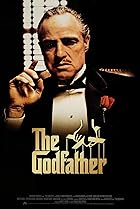
8. The Godfather (1972)R | 175 min | Crime, Drama Metascore
The aging patriarch of an organized crime dynasty in postwar New York City transfers control of his clandestine empire to his reluctant youngest son.
Votes: 1,834,453 | Gross: $134.97M

9. Heat (1995)R | 170 min | Action, Crime, Drama Metascore
A group of high-end professional thieves start to feel the heat from the LAPD when they unknowingly leave a clue at their latest heist.
Votes: 649,761 | Gross: $67.44M

10. Minority Report (2002)PG-13 | 145 min | Action, Crime, Mystery Metascore
In a future where a special police unit is able to arrest murderers before they commit their crimes, an officer from that unit is himself accused of a future murder.
Votes: 549,161 | Gross: $132.07M

11. A River Runs Through It (1992)PG | 123 min | Drama Metascore
Two sons of a stern minister - one reserved, one rebellious - grow up in rural 1920s Montana while devoted to fly fishing.
Votes: 60,783 | Gross: $43.44M

12. Se7en (1995)R | 127 min | Crime, Drama, Mystery Metascore
Two detectives, a rookie and a veteran, hunt a serial killer who uses the seven deadly sins as his motives.
Votes: 1,628,868 | Gross: $100.13M
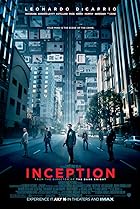
13. Inception (2010)PG-13 | 148 min | Action, Adventure, Sci-Fi Metascore
A thief who steals corporate secrets through the use of dream-sharing technology is given the inverse task of planting an idea into the mind of a C.E.O., but his tragic past may doom the project and his team to disaster.
Director: Christopher Nolan | Stars: Leonardo DiCaprio, Joseph Gordon-Levitt, Elliot Page, Ken Watanabe
Votes: 2,320,632 | Gross: $292.58M

14. Gattaca (1997)PG-13 | 106 min | Drama, Sci-Fi, Thriller Metascore
A genetically inferior man assumes the identity of a superior one in order to pursue his lifelong dream of space travel.
Votes: 303,736 | Gross: $12.34M

15. Dunkirk (2017)PG-13 | 106 min | Action, Drama, History Metascore
Allied soldiers from Belgium, the British Commonwealth and Empire, and France are surrounded by the German Army and evacuated during a fierce battle in World War II.
Votes: 649,651 | Gross: $188.37M

16. A Beautiful Mind (2001)PG-13 | 135 min | Biography, Drama Metascore
After John Nash, a brilliant but asocial mathematician, accepts secret work in cryptography, his life takes a turn for the nightmarish.
Votes: 926,080 | Gross: $170.74M

17. Dead Poets Society (1989)PG | 128 min | Comedy, Drama Metascore
Maverick teacher John Keating uses poetry to embolden his boarding school students to new heights of self-expression.
Votes: 485,363 | Gross: $95.86M

18. Howards End (1992)PG | 142 min | Drama, Romance Metascore
A businessman thwarts his wife's bequest of an estate to another woman.
Director: James Ivory | Stars: Anthony Hopkins, Emma Thompson, Vanessa Redgrave, Helena Bonham Carter
Votes: 32,772 | Gross: $25.97M

19. Terminator 2: Judgment Day (1991)R | 137 min | Action, Sci-Fi Metascore
A cyborg, identical to the one who failed to kill Sarah Connor, must now protect her ten-year-old son John from a more advanced and powerful cyborg.
Director: James Cameron | Stars: Arnold Schwarzenegger, Linda Hamilton, Edward Furlong, Robert Patrick
Votes: 1,088,255 | Gross: $204.84M

20. Giant Little Ones (2018)R | 93 min | Drama Metascore
Two popular teen boys, best friends since childhood, discover their lives, families, and girlfriends dramatically upended after an unexpected incident occurs on the night of a 17th birthday party.
Votes: 8,440 | Gross: $0.18M

21. All the President's Men (1976)PG | 138 min | Drama, History, Thriller Metascore
"The Washington Post" reporters Bob Woodward and Carl Bernstein uncover the details of the Watergate scandal that leads to President Richard Nixon's resignation.
Votes: 115,738 | Gross: $70.60M

22. Deja Vu (2006)PG-13 | 126 min | Action, Crime, Sci-Fi Metascore
After a ferry is bombed in New Orleans, an A.T.F. agent joins a unique investigation using experimental surveillance technology to find the bomber, but soon finds himself becoming obsessed with one of the victims.
Votes: 311,201 | Gross: $64.04M

23. The Girl with the Dragon Tattoo (2011)R | 158 min | Crime, Drama, Mystery Metascore
Journalist Mikael Blomkvist is aided in his search for a woman who has been missing for 40 years by young computer hacker Lisbeth Salander.
Votes: 461,718 | Gross: $102.52M

24. The Constant Gardener (2005)R | 129 min | Drama, Mystery, Romance Metascore
A widower is determined to get to the bottom of a potentially explosive secret involving his wife's murder, big business, and corporate corruption.
Votes: 141,751 | Gross: $33.58M

25. Pink Floyd: The Wall (1982)R | 95 min | Drama, Fantasy, Music Metascore
A confined but troubled rock star descends into madness in the midst of his physical and social isolation from everyone.
Votes: 81,269 | Gross: $22.24M

26. Arrival (II) (2016)PG-13 | 116 min | Drama, Mystery, Sci-Fi Metascore
A linguist works with the military to communicate with alien lifeforms after twelve mysterious spacecraft appear around the world.
Votes: 685,885 | Gross: $100.55M

27. Unforgiven (1992)R | 130 min | Drama, Western Metascore
Retired Old West gunslinger William Munny reluctantly takes on one last job, with the help of his old partner Ned Logan and a young man, The "Schofield Kid."
Votes: 410,371 | Gross: $101.16M

28. The Social Network (2010)PG-13 | 120 min | Biography, Drama Metascore
As Harvard student Mark Zuckerberg creates the social networking site that would become known as Facebook, he is sued by the twins who claimed he stole their idea, and by the co-founder who was later squeezed out of the business.
Votes: 696,990 | Gross: $96.96M
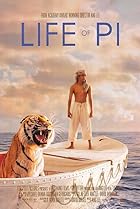
29. Life of Pi (2012)PG | 127 min | Adventure, Drama, Fantasy Metascore
A young man who survives a disaster at sea is hurtled into an epic journey of adventure and discovery. While cast away, he forms an unexpected connection with another survivor: a fearsome Bengal tiger.
Votes: 626,735 | Gross: $124.99M

30. American Beauty (1999)R | 122 min | Drama Metascore
A sexually frustrated suburban father has a mid-life crisis after becoming infatuated with his daughter's best friend.
Votes: 1,146,612 | Gross: $130.10M

31. Get Real (1998)R | 108 min | Comedy, Drama, Romance
A tenderly romantic coming-of-age story as two boys in a British school fall in love.
Votes: 14,167 | Gross: $1.20M

32. About Schmidt (2002)R | 125 min | Drama Metascore
A recently retired man embarks on a journey to his estranged daughter's wedding, only to discover more about himself and life than he ever expected.
Votes: 128,968 | Gross: $65.02M

33. The Silence of the Lambs (1991)R | 118 min | Crime, Drama, Thriller Metascore
A young F.B.I. cadet must receive the help of an incarcerated and manipulative cannibal killer to help catch another serial killer, a madman who skins his victims.
Votes: 1,414,640 | Gross: $130.74M

34. Goodbye Christopher Robin (2017)PG | 107 min | Biography, Drama, Family Metascore
The relationship between writer AA Milne and his son, Christopher Robin, and how this became the inspiration for Winnie the Pooh.
Votes: 27,703 | Gross: $1.74M

35. Center of My World (2016)Unrated | 115 min | Drama, Romance
After a summer spent with his his best friend Kat to escape his family, Phil goes back to school and starts to question his feelings towards Nicholas, a new classmate.
Votes: 6,316

36. Syriana (2005)R | 128 min | Drama, Thriller Metascore
A politically charged epic about the state of the oil industry in the hands of those personally involved in and affected by it.
Votes: 130,638 | Gross: $50.82M
Source: imdb.com

Photography to me
Photo by Constantin Panagopoulos on Unsplash
skill. moments. interpretation. expression.


How did photography enter your life?
For me, there were the family photos with an instamatic camera that my mom took. They ended up in family albums and in frames on walls as memories of moments, family, friends, holidays.
In those days, photography was hit and miss – and seriously expensive! You bought film, took a photo that you did not see and then took it in for development and printing. That could sometimes result in a failed outcome of exposed film, etc.
Photos today are 180 degrees the opposite – they are ubiquitous, free and disposable. Millions are taken and uploaded and forgotten.
We could not afford an SLR camera growing up and I looked at fancy cameras with fascination and envy. At high school I was lucky enough to be able to borrow a school camera and take photos that I used for art projects.
My first proper camera was a DSLR – a Canon EOS 20D. It fulfilled much the same function as my early family cameras – capturing memories and moments, especially as I toured the world on business. That started to change as I got more comfortable with playing with settings and light – and my first trips into the African bush.

Photo – DPReview
The photo that changed things
Cameras have evolved in leaps and bounds and my early Canon experience was largely trying to take a great capture of a moment with sharp well lit photos.
As I really struggled in poor light with the best leopard photo opportunity I had had to that date, I decided that it was eventually time for an upgrade after I had upped my skill levels.
But I also realised that photos were about capturing the feeling of the moment as I experienced it. Taking the best shot of anything was unlikely. There are amazingly skilled and artistic people out there. But it could be something special to me about a special moment.


Photo – Iriese
As the technology has improved I bought my second camera – a Nikon D850. The D850 is widely regarded as the best DSLR ever made. That together with lenses that have image stabilisation put professional results in the hands of amateur photographers.
It was an enormous investment for me and I obsessively read everything I could. I poured over Ken Rockwell‘s review and sample images and made up my mind. I bought the AF-S Nikkor 24-120mm 1/4G ED VR lens and I practiced and saved for almost a year before adding the Sigma 60-600mm F4.5-6.3 DG OS HSM zoom lens.
With new tools, more practice and understanding, my photography desires began to change. “World-class” photos are now so widespread and sometimes arrived at by happy accident, that – to my eye – the photos that have wow factor are now increasingly a result of a moment, a story, composition, light, processing – and skill. Of course they always were.
Peter Haygarth‘s award winning image of a Cheetah defending itself against an attack from a pack of wild dogs has all those qualities.
When we pick images that we rank as our favourites, we do so based on what fits our eye. This image has had limited processing, but achieves a mix of drama that is characteristic of an artist’s interpretation. Rather than merely being a skilled photo based on being at the right place at the right time (with all the skill and patience that takes), it achieves a whole lot more.

Big Cat and Dog Spat – Peter Haygarth – https://peterhaygarth.com/
World wildlife photographer of the year 2019 – Highly Commended
We are entering an era where AI can generate a photo from ether based on a desired result. Increasingly I want a photo that I take to be an interpretation and less a capture.

Africa Portfolio – Shaaz Jung – http://shaazjung.com/portfolio-items/africaportfolio/
Used with permission
Used with permission
National Geographic photographer Shaaz Jung mixes incredible photographical skill with processing in a way that results in ethereal mysticism. To me, a masterful blend of both can create an art form and interpretation where memories and imagination meet. They can result in a recognizable personal style.
As I continue to gain my 10 000 hours of experience, my excitement in photography is to find a way to capture and show moments that interpret and express.
